
Classroom Programs
Teaching and Learning
At Montmorency South, learning and wellbeing are at the centre of everything we do. That is, ensuring we create classroom environments that enable the conditions for optimal learning. We do this by not only creating engaging and well-crafted learning sequences, but also by establishing and maintaining consistent, predictable routines. Our school is structured to create the conditions for all students to have the opportunity to advance along the learning continuum whilst developing their personal and social capabilities as they progress through their primary school years.
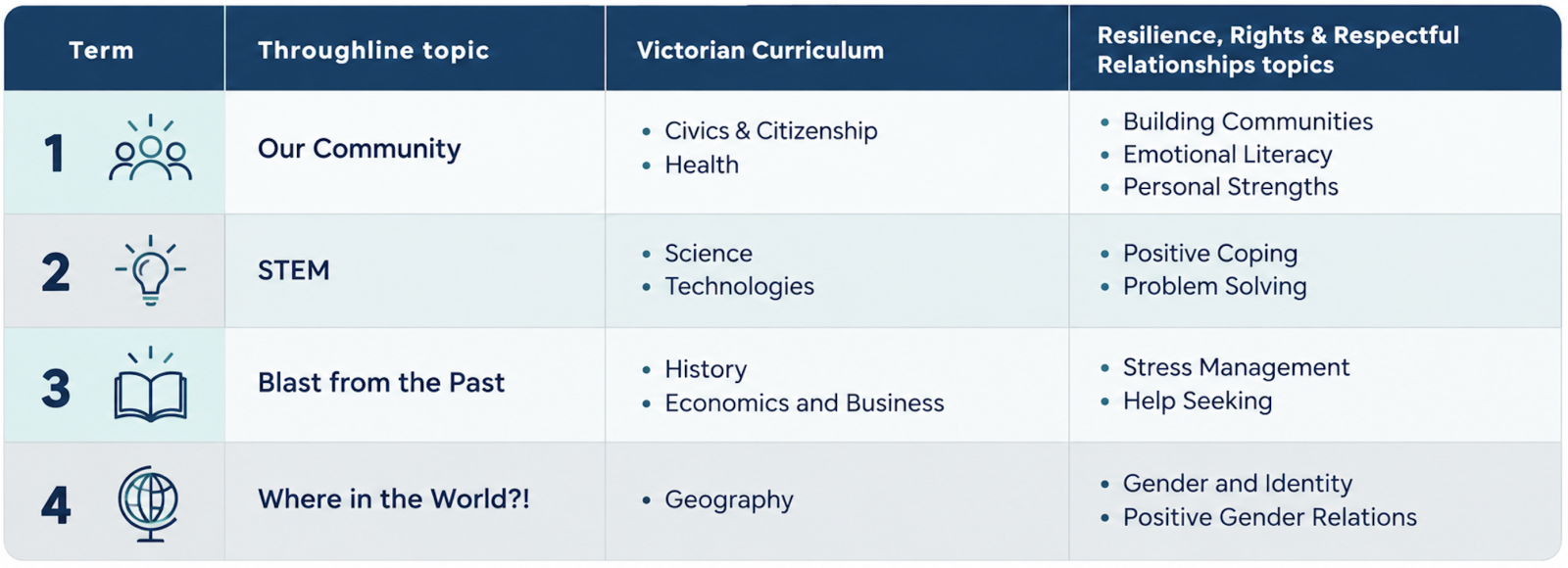
To ensure our school maintains a cohesive and consistent teaching and learning program across the school, we have established a ‘throughline’ for each term. Literacy and Numeracy programs are geared towards integrating the following topics:
Teaching Approach
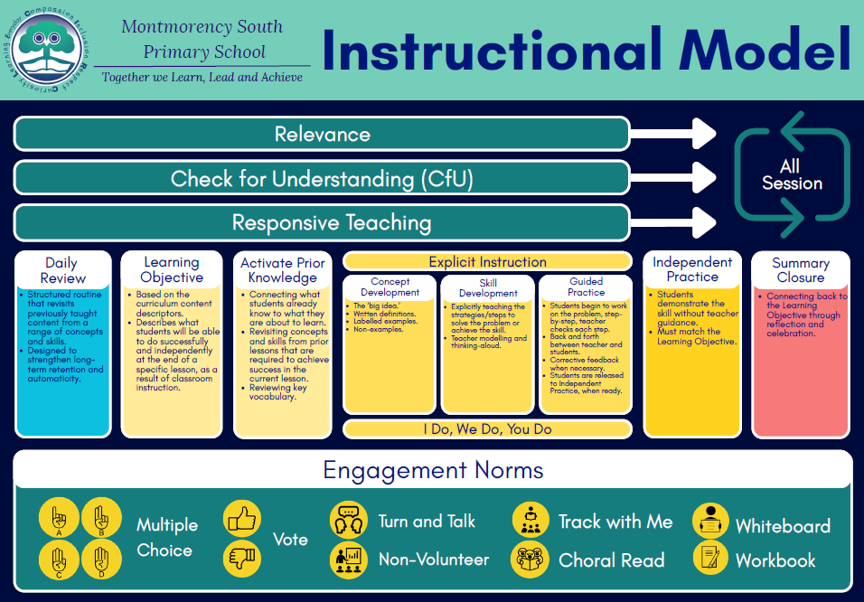
At Monty South, we follow the Victorian Curriculum F-10. Explicit Teaching is our core instructional practice and is aligned with the Victorian Teaching and Learning Model 2.0. This evidence-based approach involves teachers providing clear, purposeful instruction that helps students understand what they are learning, why it matters and how to be successful.
Teachers introduce and model new knowledge and skills in a clear, step-by-step way. Complex learning is broken into smaller, manageable chunks, allowing students to process new information, connect it to what they already know and gradually build their understanding. Rather than expecting students to discover new concepts independently, teachers explicitly demonstrate the thinking, strategies and processes required for success before asking students to demonstrate skills independently.
Lessons are carefully structured so that students understand the purpose of their learning, what success looks like and the steps they can take to achieve it. Throughout instruction, teachers regularly check for understanding using a range of written, verbal and gestural responses. These strategies encourage active participation and allow teachers to quickly identify when students may need further explanation or support.
Teachers also provide timely, targeted and corrective feedback throughout the learning process, helping students strengthen their understanding, address misconceptions and build confidence. Through clear explanations, modelling, active participation and ongoing feedback, Explicit Teaching creates a supportive and focused learning environment where every student is given the opportunity to experience success and make progress.
All learning areas at our school follow the Montmorency South PS Instructional Model.
Literacy
We follow a systematic synthetic phonics program. Within our daily 120 minutes of Literacy instruction, we teach:
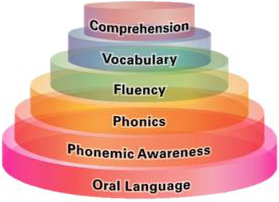
- Oral language
- Phonemic awareness
- Phonics
- Morphology
- Daily fluency practice
- Vocabulary building
- Comprehension
- Grammar
- Genre writing
- Handwriting
- The ‘Big 6’ of Reading
Teachers integrate the content from the term throughline into their reading passages and writing pieces which builds student background knowledge and understanding of all key learning areas.
The ‘Big 6’ of Reading
Mathematics
Similar to Literacy, our Mathematics program is developed to ensure all concepts are introduced, taught and reviewed in a systematic way. Maths is taught for 60 minutes per day or a minimum of 300 minutes throughout the week (timetable dependent).
Teachers use a range of assessments to ensure all students receive targeted explicit teaching at their point of need, following our Instructional Model.
We use flexible groupings across each cohort to better target our teaching, and pre and post testing for each topic enables teachers to monitor their impact.
High Achievers:
High ability students are offered a range of additional programs to engage and stretch them to apply their knowledge and skills in a range of different contexts. These programs include:
- Gateways
- Maths Olympiad
- Victorian High Ability Program
Resilience, Rights and Respectful Relationships (RRRR)
The Respectful Relationships program is mandated in all government schools and acts to promote and model respect, positive attitudes and behaviours. At MSPS, all classes have weekly timetabled RRRR lessons but is also woven into everything we do and is supported by our whole school values. It teaches children how to build healthy relationships, resilience and confidence while promoting positive relationships.
In Semester 1, students explore the topics of Emotional Literacy, Personal Strengths, Positive Coping and Problem Solving. Emotional Literacy aims to teach students the vocabulary for identifying and naming their emotions which is an integral element of understanding self. Students learn to identify their personal strengths, how they can use them to problem solve, self-manage and influence others around them.
In Semester 2, students explore the topics of Stress Management, Help-seeking, Gender and Identity and Positive Gender Relations. Students identify their own personal coping strategies to self-calm and manage themselves in stressful situations, practice solving interpersonal problems, and discuss the importance of seeking help when the problems are too big to solve alone. Throughout these topics, students have also been encouraged to develop an awareness of, and challenge gender norms, as well as develop an appreciation of their own identity and differences between themselves and others.
Reporting
The Montmorency South Primary School reporting model comprises of:
- Parent Information Evenings (PIEs)
- 3 Way Conferences
- Semester written reports
- Student Learning Journey night
- Student Support Group (SSG) meetings – where applicable
- Individual Education Plans (IEPs) – where applicable
The Curriculum Team
Montmorency South Primary School’s teaching and learning programs are overseen and supported by the Curriculum Team.
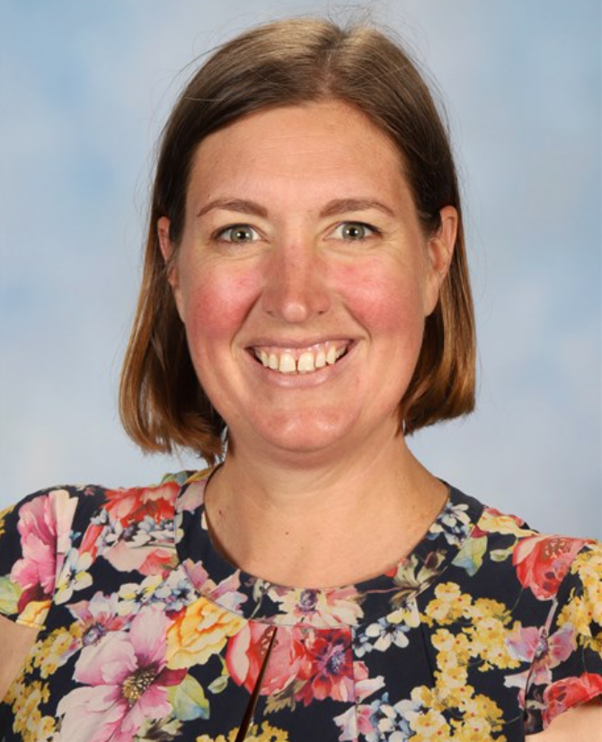
Rachel Phillips
Learning Specialist
- Professional Learning
- Instructional Coaching
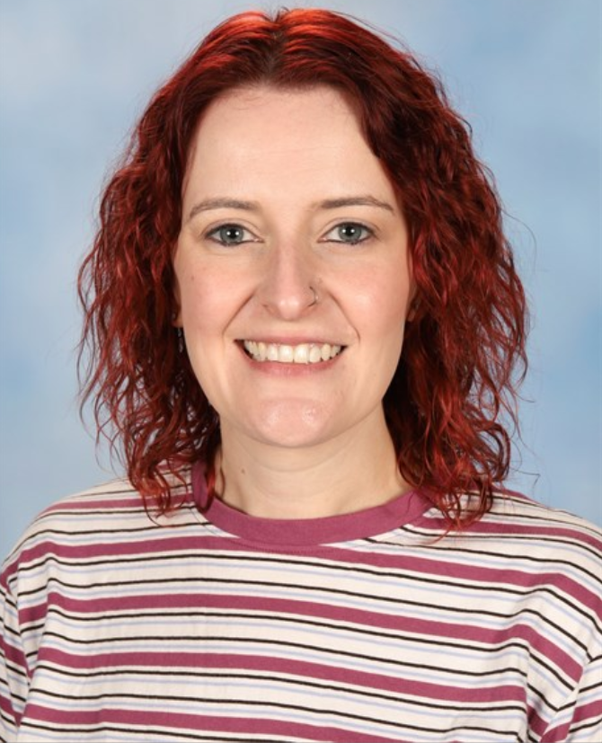
Eliza Crellin
Learning Specialist
- Professional Learning
- Instructional Coaching
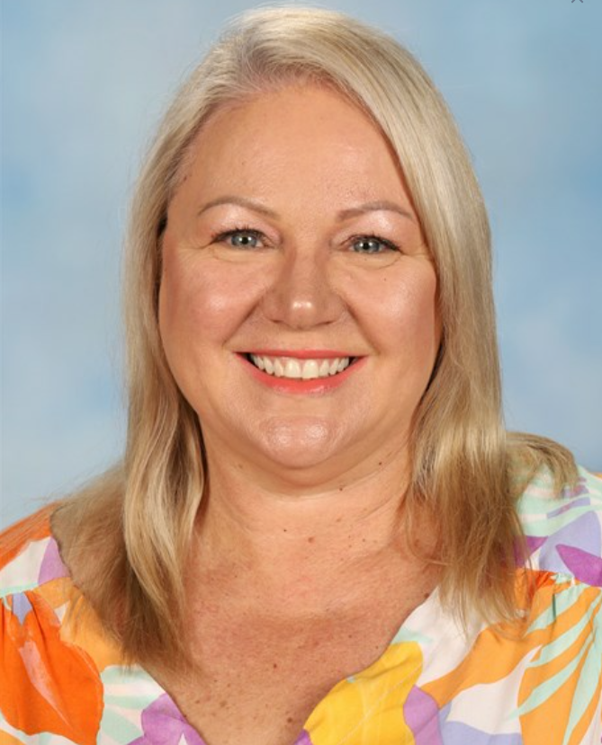
Nerinda Hodgson
Literacy Leader
- Oversee Programs
- Resourcing